The governance gap is real. These books close it.
——— THE RIGHT QUESTIONS SERIES
Every complex initiative your organisation undertakes is governed by leaders who reached their positions through functional excellence, strategic vision, and commercial acumen — not through years sitting inside the project machine. That gap between authority and operational understanding is the single most consistent cause of costly, disappointing, and quietly reframed project outcomes.
This series gives you the questions that close it.
"Most complex initiatives do not fail. They degrade. They deliver a diminished version of the original promise, at a cost that was not in the business case, on a timeline that was not in the approval memo. They cross the finish line. They are declared successful. And the next initiative begins in exactly the same conditions as the last one."
— Skin in the Game, Introduction

HOW TO READ THE SERIES
Volume 1
Skin in the Game
All Senior Leaders
Volume 2
The Sponsor’s Playbook
Named Project Sponsors
Volume 3
Beyond the Project Curtain
CEOs, CFOs & C-suite
Each book stands alone — start with whichever speaks most directly to your current role. Together they form a complete picture of the governance ecosystem: from the broad stakeholder community, to the named sponsor, to the organisational summit where the most consequential and least operationally informed decisions are made.
THE THREE VOLUMES
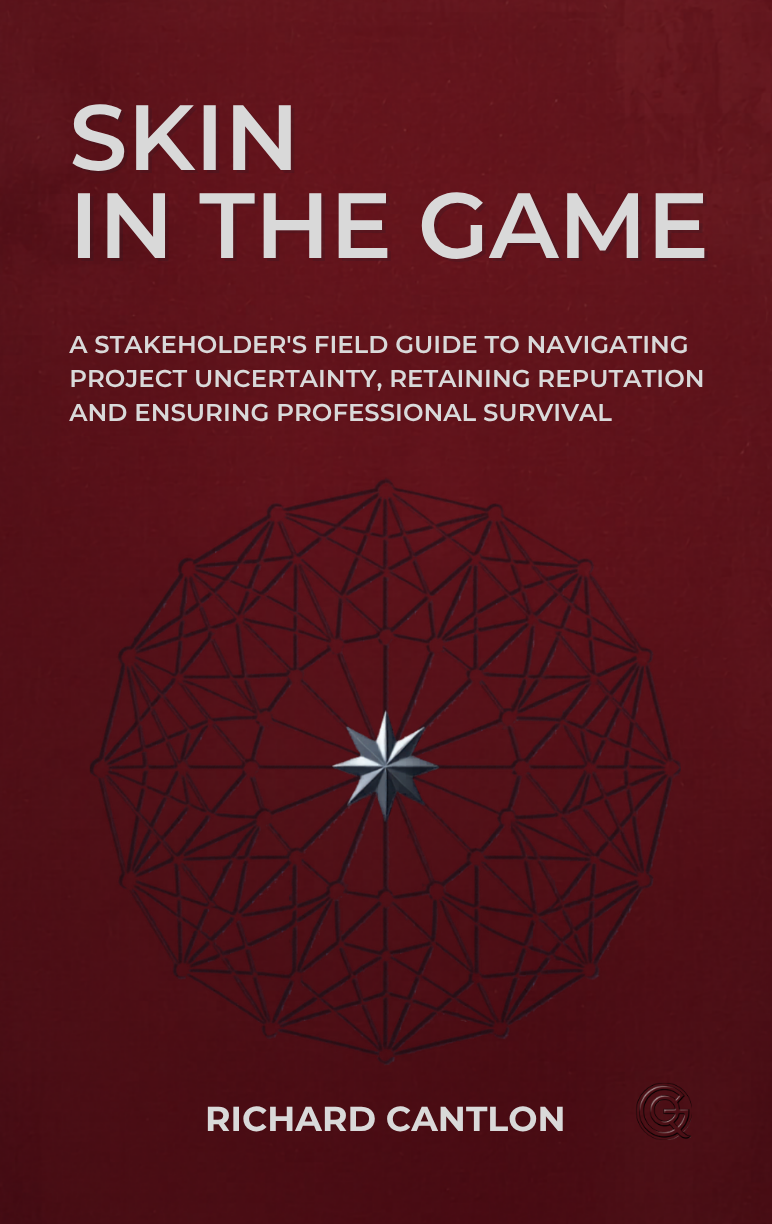
VOLUME 1
Skin in the Game
A Stakeholder’s Field Guide to Navigating Project Uncertainty, Retaining Reputation and Ensuring Professional Survival
Senior leaders, functional executives, steering committee members, board members
The broadest entry point to the series. This book establishes the full landscape: why initiatives consistently degrade rather than fail, how information is managed upward through governance structures, where the doom loop originates — and what deliberate, consequential stakeholder engagement looks like in practice. Start here if you are new to the series, or if you want the complete picture before moving to a more specific role.
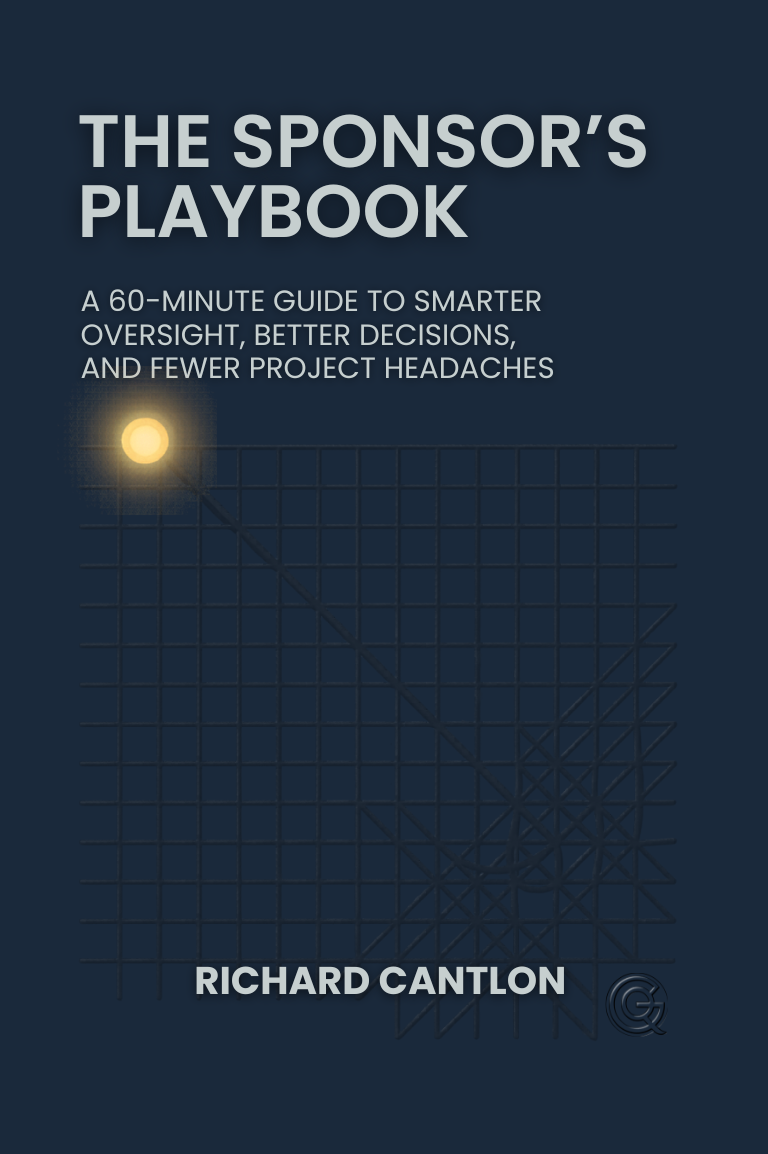
VOLUME 2
The Sponsor's Playbook
A 60-Minute Guide to Smarter Oversight, Better Decisions, and Fewer Project Headaches
Named project sponsors and accountable executives
Written for the executive formally accountable for a specific initiative's strategic outcome — and who needs to discharge that accountability effectively without getting mired in operational detail. A prescriptive, question-driven framework organised by project lifecycle stage: before the business case, at approval, during delivery, and at completion. Read it in an hour. Use it for the life of every project you sponsor.

VOLUME 3
Beyond the Project Curtain (CEO/CFO Edition)
The Intelligence Brief for the C-Suite. Ten Questions to Flush Out the Fairytales and Unveil the Reality.
Ten questions. Maximum compression. Written for leaders whose authority over the project portfolio is the most consequential in the organisation — and whose time is the scarcest. Deployed at the right moment in a project's lifecycle, these questions cut through governance theatre, expose the gap between what is being reported and what is actually happening, and give the people at the summit a reliable view of what is happening to their investment.
CEOs, CFOs, and C-suite executives
ABOUT THE AUTHOR

Richard Cantlon has spent more than four decades at the intersection where organisational structure meets the unpredictable reality of human behaviour — operating across government agencies, boutique firms, and global organisations in roles from technical expert and project director to senior executive. He has delivered, rescued, and overseen complex change programmes at scale, and has seen firsthand what happens when the people accountable for major projects lack the tools, the language, or the honest intelligence to discharge that accountability effectively. These books exist to close that gap. He lives and works in Sydney, Australia.
Richard Cantlon
All titles are available through major retailers. Explore the full catalogue on Amazon → amazon.com/author/richardcantlon
Work directly with Richard. One-to-one consultations for executives who want to apply these frameworks to a specific initiative — whether you are approving a business case, governing a programme under pressure, or trying to understand why a project is not delivering what was promised.